Feral Cat Feeding Stations
A feeding station is more than bowls on the ground — height, cover, schedule, and cleanup decide whether you feed cats or the whole forest.
The problem
Ground-level open bowls invite raccoons, skunks, and spoilage. Leftover food creates smell, insects, and neighbor conflict.
What we have learned in Wurtsboro
Our morning feed is a rhythm the outdoor crew depends on. Consistency matters as much as calories. Covered, raised setups and prompt pickup of leftovers keep the routine sustainable.
Raise and cover
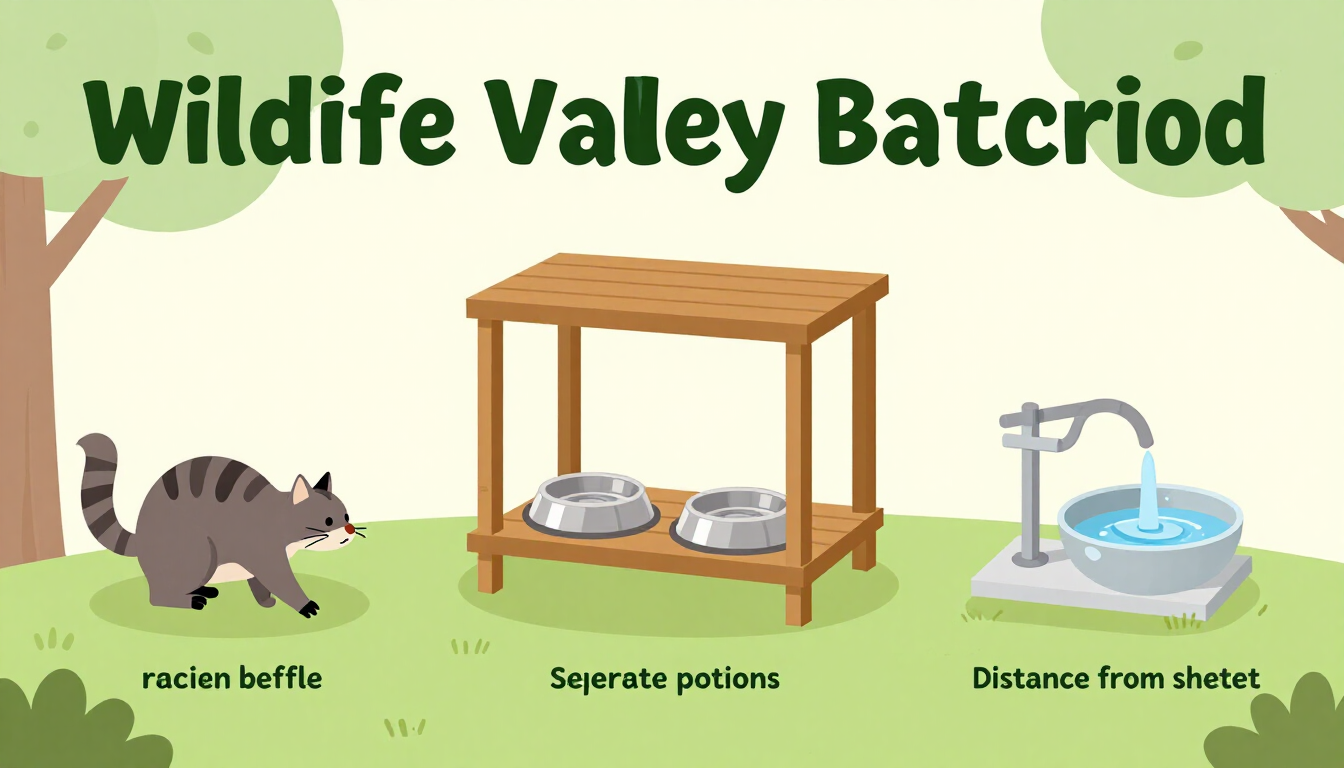
A platform a few inches up with a simple roof keeps kibble dry and slows casual wildlife. Stainless bowls clean fast and do not hold odors like plastic.
Schedule beats free-feeding
Set amounts at set times, then pick up what is left. Free-feeding overnight is how you sponsor raccoons. Our cam days taught us that predictable timing also helps us spot who is missing from breakfast.
Distance from dens
Feed away from sleeping shelters so animals drawn to food do not walk into the cats’ beds. A short walk is fine for healthy adults.
Winter tweaks
Slightly larger portions in deep cold, wet food when water freezes, and never let wet food sit to ice over. Heated water belongs at the station, not forgotten in a corner.
Field tips
- Use the same bowls and location so shy cats learn the routine.
- Photograph empty-vs-full patterns if multiple caretakers share duties.
- Store bulk food in sealed bins away from the station (see food storage guide).
See the method
One external educational video we trust on this topic — embedded only because it teaches a skill covered above.
DIY outdoor feeding station for community cats
SNiP Now demonstrates an inexpensive covered feeding station that keeps food dry and reduces wildlife mess.